


 News
News




Faced with major demographic, economic, and systemic challenges in education—those that impact the social environment of the student population—the future of higher education must undoubtedly foster models and structures that position the student as the main protagonist and at the center of the educational mission.
Inspiring students to persist until completing their degree means knowing them in all their dimensions—their competencies, their challenges—and educating them to overcome those challenges while creating a learning environment that encourages creativity and critical thinking. It is not enough to simply prevent them from dropping out; we must support them so they feel valued, heard, and understood, helping them become the professionals they aspire to be.
Each student has a unique context. Some face financial challenges, others must balance family and work responsibilities, and many begin college with fears or doubts about their abilities. The success of each student who trusts their education to our higher learning institutions is not achieved by chance—it is built, worked on as a team, and inspired so that each student can turn obstacles into opportunities and dreams into realities.
It is essential to support faculty and provide them with tools to effectively address the profile of students in their classrooms. This includes establishing a training program with topics related to active learning strategies framed within the constructivist paradigm—addressing the characteristics of both high school and adult students, with an andragogical approach, artificial intelligence, and digital transformation, among others. These elements directly impact student success from the classroom, shaping their ethical values as future professionals.
The administrative and student affairs teams, for their part, support students with agility, sensitivity, and empathy in meeting their needs.
We must establish spaces for reflection within the university community focused on retention, persistence, and student success as core components in shaping the future of higher education in Puerto Rico—emphasizing the essential role of each university unit. If each area contributes to developing an organizational culture centered on student success, we can integrate the academic and student support systems of the university.
In every graph and data point presented to accrediting agencies and federal entities, stories, dreams, and realities of university students are woven together. There is a wealth of qualitative data and lived experiences that go beyond statistics. The essence of an effective student retention and persistence model is built collaboratively with the academic, student, and administrative communities—from the security guard who greets students to the interaction with academic and social support staff.
Let us foster a university community that builds resilience, cultivates confidence, and celebrates every achievement. To persist is, in essence, to believe in the future with hope and to work every day toward it. Walking alongside our students—supporting them until graduation—is how, together, we build an institutional retention model that integrates the entire university community.
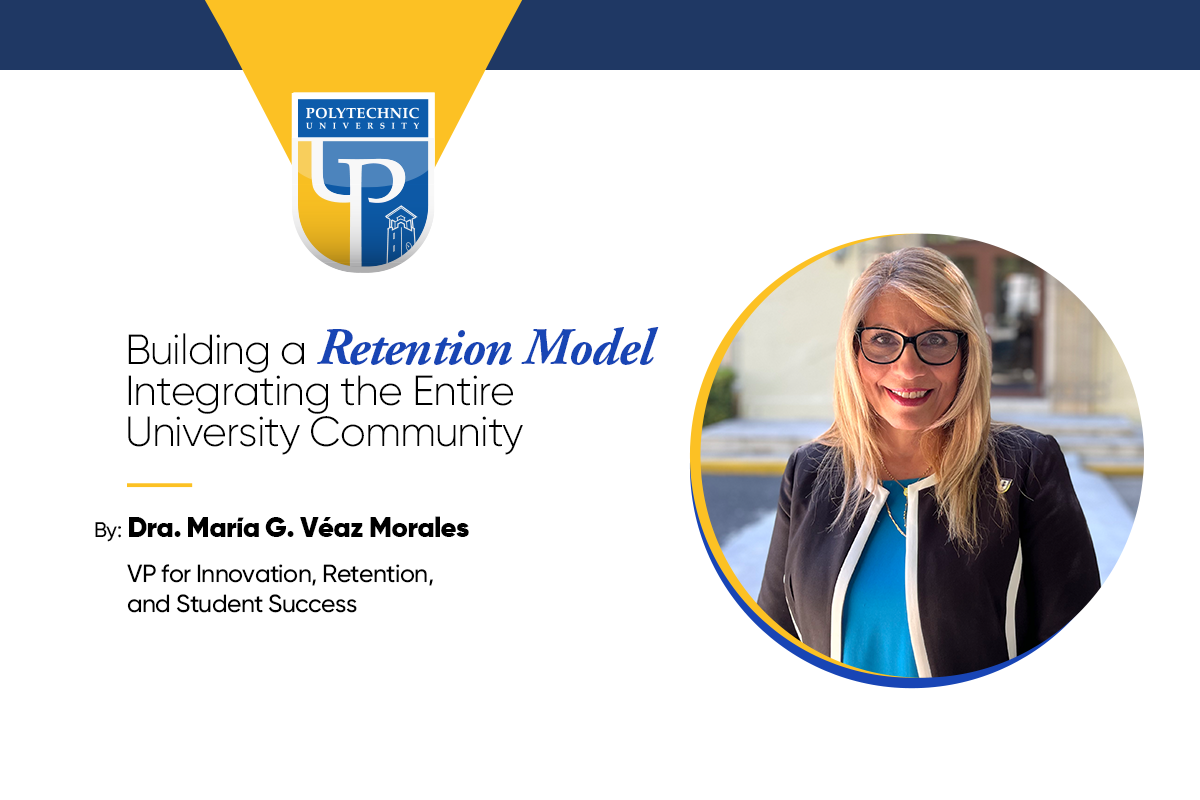
By: Dr. María G. Véaz Morales
VP for Innovation, Retention, and Student Success